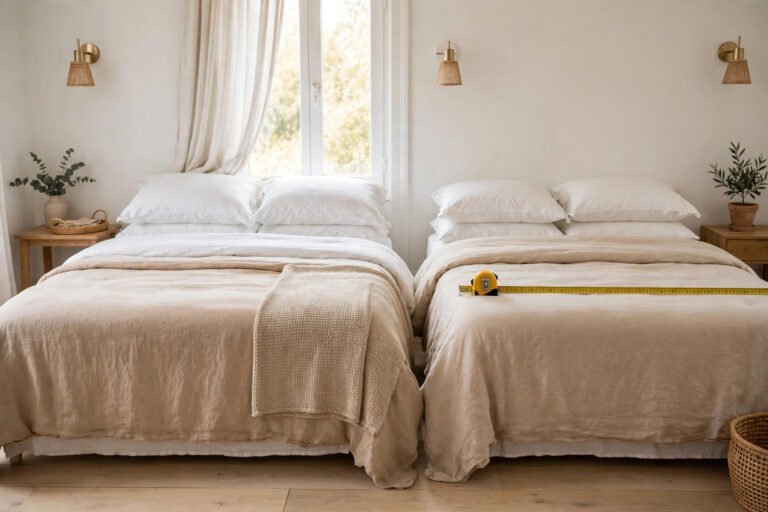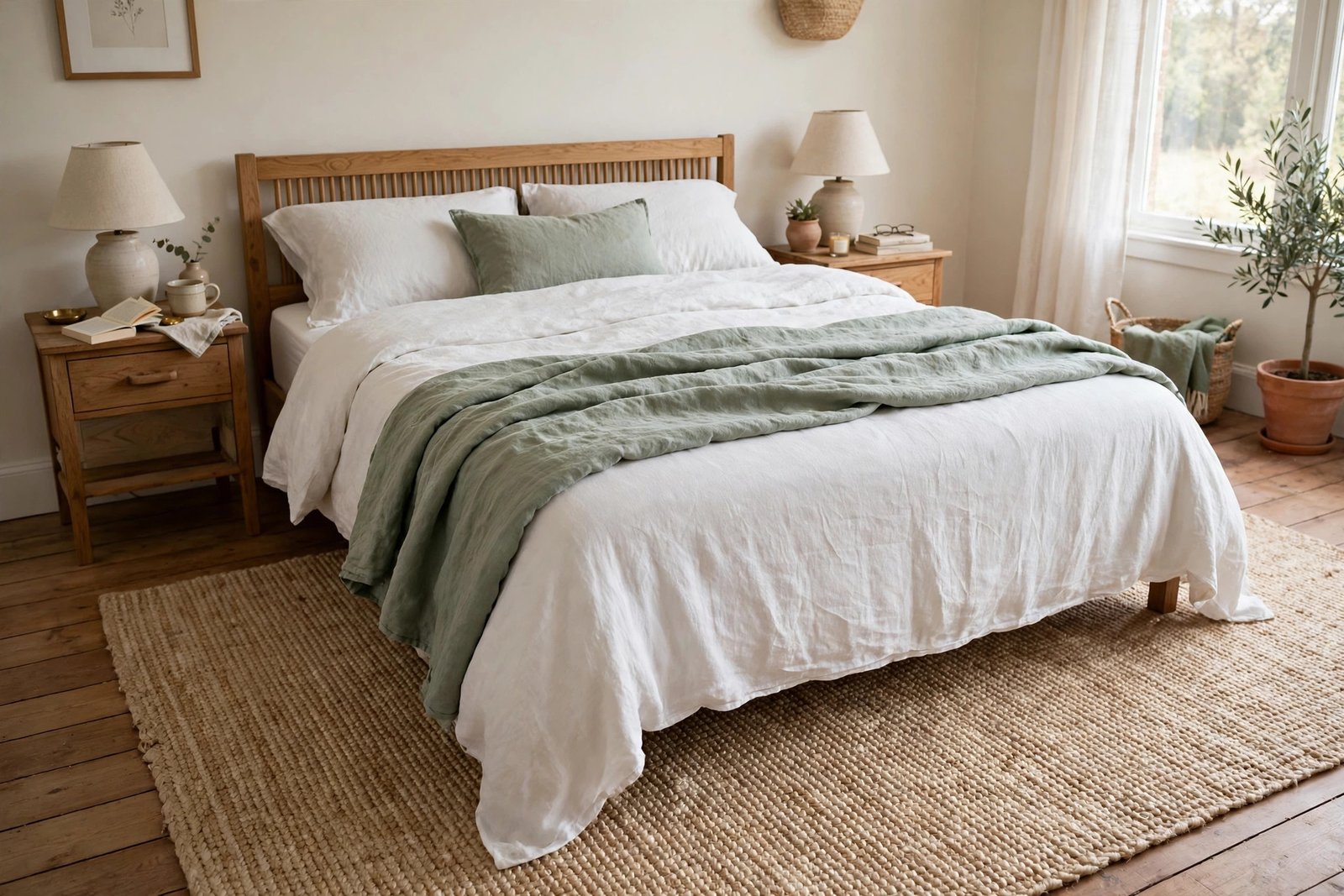
What Size Rug for a Bedroom? Queen, King and Small Rooms Explained

Grecian Finds is reader-supported. When you buy through links on our site, we may earn an affiliate commission — it never costs you extra.
Short answer: For most bedrooms, a queen bed takes an 8×10 rug and a king bed takes a 9×12 rug. Slide the rug under the lower two-thirds of the bed so it extends past the sides and the foot, leaving about 18 inches of bare floor showing around it. If your room is tight, step one size down rather than squeezing a rug wall to wall. Work out your exact size with our rug size calculator.
A rug that is too small is the most common bedroom decorating mistake. It makes the bed look like it is floating and leaves your feet hitting cold floor every morning. A rug that is too big is almost as bad — it creeps under the nightstands, eats the walkway and makes the room look carpeted. The fix is simple: size the rug to the bed, then check it against the room.
What size rug do I need for a queen bed?
An 8×10 rug is the right size for a queen bed in most bedrooms. A queen mattress is 60 × 80 inches, so an 8-foot-wide rug leaves roughly 18 inches showing on each side of the bed — exactly the border that frames the rug without swallowing the floor. At the foot, the rug extends about two feet past the mattress, so you step onto soft rug, not bare floor, when you get out of bed.
When does a 9×12 fit a queen better? In a large master bedroom, roughly 12 × 15 feet or bigger. The extra rug fills the empty floor on either side of the bed and stops the room looking sparse. If your room is smaller than that, the 9×12 will push too close to the walls and the nightstands will end up sitting on it — which is the sign you have gone a size too big.
Browse 8×10 bedroom rugs on Amazon
What size rug do I need for a king bed?
A king bed usually needs a 9×12 rug. A king mattress is 76 × 80 inches — 16 inches wider than a queen — so the 8×10 that works for a queen leaves only about 10 inches of rug showing on each side of a king. That still works, but it looks skimpy, and the rug can disappear under the bedding. The 9×12 gives you around 16 inches on each side and a generous stretch at the foot, which is the proportion a king bed needs to look grounded.
There is one exception: a tight room. If your bedroom is under about 12 × 15 feet, a 9×12 rug will leave less than 18 inches of bare floor to the walls and start to look wall to wall. In that case an 8×10 is the better fit — your feet still land on rug when you get up, and the room keeps its breathing space. The same 18-inch border rule our rug size calculator uses is what decides it: measure the room first, then pick the size.
Browse 9×12 bedroom rugs on Amazon
What size rug for a small bedroom?
In a small bedroom, the room decides — not the bed. A 12 × 12 ft room with a queen bed usually takes an 8×10 rug, but measure before you buy: if the rug would leave less than about a foot of bare floor to any wall, step down. The options that work in tight rooms are:
- 5×8 rug — placed under the lower half of the bed, it gives you a soft landing at the sides and foot without crowding the walls. Best for twin and full beds in rooms under about 10 × 12 feet.
- Bedside runners — one runner on each side of the bed, about 2×3 feet wide and as long as the bed. You get the warm first step in the morning with no rug under the bed at all, which suits very small rooms and rented rooms where you do not want to move heavy furniture.
- Three-quarter placement — a rug that sits under the foot of the bed only, rather than running underneath it. It reads as intentional rather than too small, as long as it extends past both sides of the bed.
What does not work in a small room is forcing a full-size rug in and letting it touch the walls or slide under the nightstands. A rug that reads as wall-to-wall carpet makes a small bedroom feel smaller, not cosier.
Where should the rug sit under the bed?
Placement matters as much as size. The rule that works in almost every bedroom is: rug under the lower two-thirds of the bed, nightstands off the rug, about 18 inches of bare floor showing around the rug edges.
- Under the lower two-thirds: the rug starts somewhere around the middle of the bed and runs past the foot. The head of the bed and the pillows sit on bare floor, which nobody sees — and you do not waste rug where nobody walks.
- Nightstands off the rug: nightstands sitting half on and half off a rug wobble, and the rug edge under them looks like a mistake. Keep the rug narrow enough that the nightstands stay on the floor.
- 18 inches of bare floor: that border is what makes the rug look like a rug instead of fitted carpet. It also leaves a clear walkway around the bed.
- Feet land on rug: the real test. Sit on the edge of the bed and put your feet down — they should land on rug, not cold floor. If they do not, the rug is too small or pushed too far under the bed.
How do I check my exact size with the calculator?
Bed-size rules get you close, but your room is the final judge. Our rug size calculator takes your room’s length and width, applies the 18-inch border rule, and snaps the answer to a standard size you can actually buy — 5×8, 8×10 or 9×12.
Worked example, straight from the tool page: a 13 × 11 ft bedroom takes an 8 × 10 ft rug. That is the tool’s own bedroom example — an 8-foot-wide rug in an 11-foot-wide room leaves 18 inches of bare floor on each side, and a 10-foot-long rug in a 13-foot-long room leaves the same at each end. Measure your room in feet, enter the numbers with the room type set to bedroom, and use the result to confirm the bed-size rule above before you order.
| Bed size | Bed dimensions | Rug that usually fits | Minimum room (18-in border) |
|---|---|---|---|
| Twin | 38 × 75 in | 5×8 | 8 × 11 ft |
| Full / double | 54 × 75 in | 8×10 | 11 × 13 ft |
| Queen | 60 × 80 in | 8×10 | 11 × 13 ft |
| King | 76 × 80 in | 9×12 | 12 × 15 ft |
| California king | 72 × 84 in | 9×12 | 12 × 15 ft |
Two notes on the table: the minimum room is the 18-inch border rule applied to the rug, so a room smaller than that means stepping a size down or switching to runners. And if your bedroom has an unusual shape — a nook, a bay window, an en-suite door swinging in — measure the clear floor area the rug will actually sit on, not the full room footprint.
Bedroom rugs vs living-room rugs — what changes?
The sizing logic is the same, but the placement is different. In a living room the rug sits under the front legs of the sofa; in a bedroom it sits under the lower two-thirds of the bed. The 18-inch bare-floor border applies in both rooms. If you are sizing a living-room rug too, our living-room rug size guide covers sofas and sectionals, including what size rug for two couches and what size rug for a sectional with a chaise. Dining rooms play by a different rule again — the rug has to extend 24 inches past the table, covered in our dining-table rug guide. Browse the rest of our free tools for the other calculators.
Frequently asked questions
What size rug do I need for a bedroom?
Place the rug under the lower two-thirds of the bed, extending beyond the sides and foot of the bed, with about 18 inches of bare floor showing around the rug. The tool’s example: a 13 x 11 ft bedroom takes an 8 x 10 ft rug. As a guide, a queen bed usually suits 8×10 and a king bed 9×12 — enter your room size in the rug size calculator to confirm for your room.
What size rug do I need for a queen bed?
An 8×10 rug in most bedrooms — it leaves about 18 inches of rug showing on each side of a 60-inch-wide queen mattress, and about two feet past the foot. In a large master bedroom (12 x 15 ft or bigger), a 9×12 fills the space better and stops the room looking sparse.
What size rug do I need for a king bed?
A 9×12 rug in most bedrooms — a 76-inch-wide king needs the extra width so the rug still shows about 16 inches on each side. In a tight room under about 12 x 15 ft, step down to an 8×10 so the rug keeps its 18-inch border to the walls instead of looking wall to wall.
What size rug do I need for a small room?
Enter the room’s length and width in the rug size calculator — it snaps the answer to a standard buyable size (5×8, 8×10, 9×12). Keep about 18 inches of bare floor between the rug edge and the wall. If a full rug will not fit, bedside runners on each side of the bed give you the soft first step without moving heavy furniture.
How do I measure my room for a rug?
Measure the room’s length and width in feet and enter them in the calculator with the room type. Then check the result against the placement rule: about 18 inches of bare floor around the rug in living rooms and bedrooms, and in dining rooms the rug extending at least 24 inches beyond the table on all sides so chairs stay on it when pulled out.