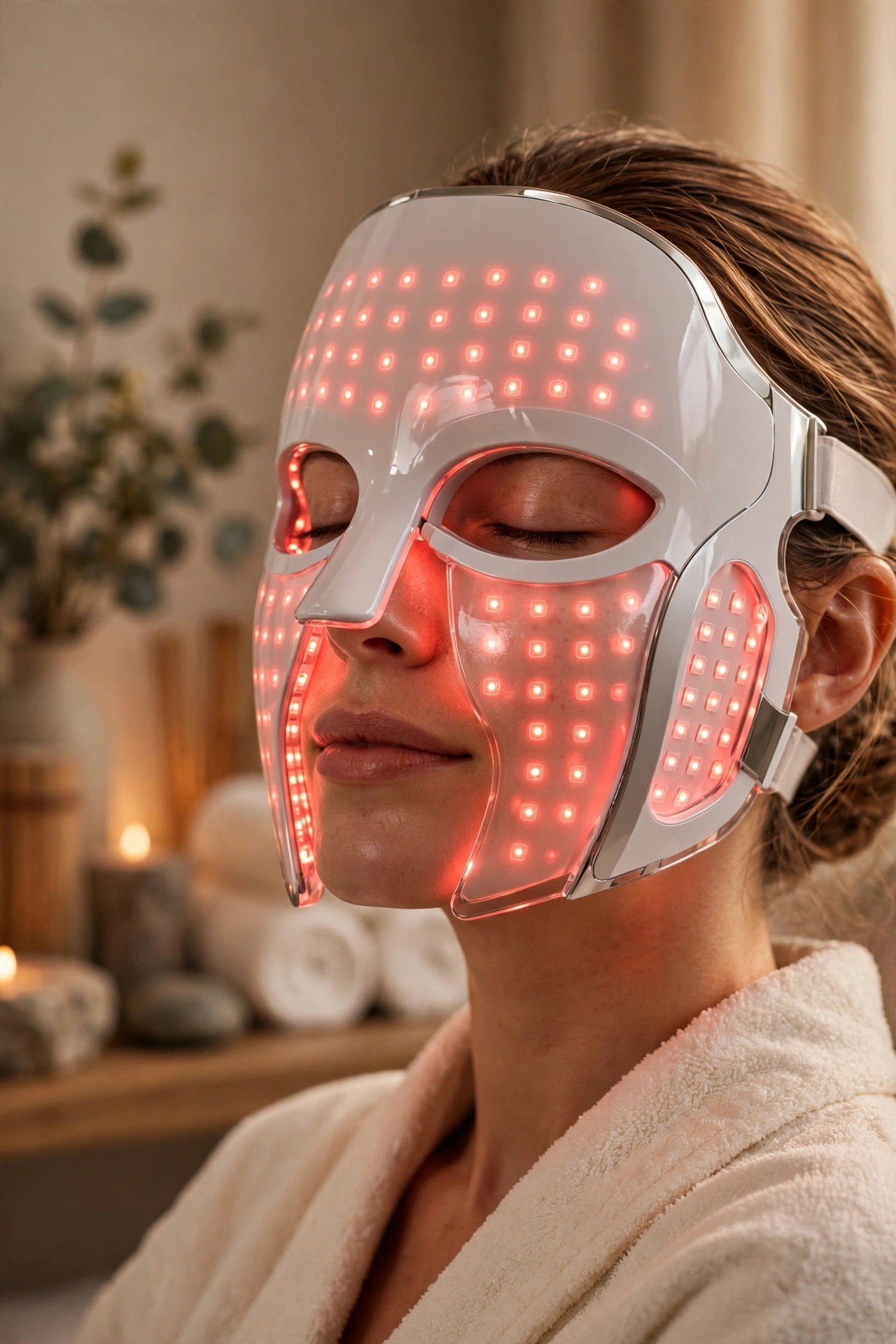
Best LED Face Mask (2026): 6 Picks Worth Your Money

Grecian Finds is reader-supported. When you buy through links on our site, we may earn an affiliate commission — it never costs you extra.
The short answer: the CurrentBody Skin LED Light Therapy Mask is the best LED face mask for most people — red and near-infrared light at clinically studied wavelengths, flexible silicone fit, usually ~$450–500. For acne-prone skin, the Dr. Dennis Gross DRx SpectraLite FaceWare Pro pairs red light with blue light and runs a 3-minute treatment. Budget pick: the iRestore LED Face Mask, often ~$300–350, covers the same red-light basics without the premium branding.
LED masks promise spa-grade light therapy at home — fewer fine lines, calmer breakouts, more even tone — without appointments or recovery time. The catch is that not all masks use the same light: cheap panels often run at the wrong wavelengths or too-low power to do anything. Here's what's actually worth your money.
What does an LED face mask actually do?
An LED face mask shines specific wavelengths of light onto your skin. Red light (around 630–660nm) and near-infrared light (around 830–850nm) are the well-studied pair: red light is associated in clinical research with collagen support and reduced fine lines, while blue light (around 415nm) targets acne-causing bacteria. Near-infrared penetrates deeper than red light and is used for inflammation and healing support.
Results are gradual — most studies run 8–12 weeks of regular sessions. An LED mask is a slow-burn skincare tool, not an overnight fix. Anyone selling you "instant results" is selling you something else.
Red light vs blue light: which do you need?
Choose red + near-infrared if your goals are fine lines, firmness, or uneven tone. This is the anti-aging combination with the most published research behind it.
Choose red + blue if acne is the main concern. Blue light targets the bacteria linked to breakouts; red light calms the inflammation around them. The Dr. Dennis Gross mask below is the classic dual-light option.
Skip near-infrared only if you have a specific medical reason — some conditions (like melasma in certain cases) warrant a dermatologist's guidance before adding light therapy.
Quick comparison: the best LED face masks
| Mask | Light modes | Treatment time | Best for | Price* |
|---|---|---|---|---|
| CurrentBody Skin LED | Red + near-infrared | 10 min | Best overall | ~$450–500 |
| Omnilux Contour Face | Red + near-infrared | 10 min | Wrinkles / firmness | ~$395–450 |
| Dr. Dennis Gross SpectraLite FaceWare Pro | Red + blue | 3 min | Acne | ~$435–480 |
| HigherDose Red Light Face Mask | Red + near-infrared | 10–20 min | Cordless / travel | ~$349–399 |
| Shark CryoGlow | Red + blue + infrared + cooling | 8 min | Sensitive / hot skin | ~$299–349 |
| iRestore LED Face Mask | Red + near-infrared | 10 min | Budget pick | ~$299–349 |
*Street prices move constantly — confirm the current price before you buy. Check prices on Amazon
1. CurrentBody Skin LED Light Therapy Mask — best overall
CurrentBody is the benchmark the rest of the category gets compared to: 132 LEDs delivering red (633nm) and near-infrared (830nm) light — the exact wavelengths used in published clinical studies — in a flexible silicone mask that actually fits a human face. Ten-minute sessions, three to five times a week, and the build quality is the best in class.
It's the most expensive pick here, but it's also the one dermatologists name-check most often. If you want one mask and you want the studied wavelengths, this is it.
2. Omnilux Contour Face — best for wrinkles
Omnilux comes from the medical-device world — the same company makes clinical light-therapy equipment — and the Contour Face uses 132 medical-grade LEDs at 633nm and 830nm. The flexible design contours to the face, and the 10-minute protocol is backed by the brand's own clinical testing on fine lines and wrinkles.
Choose Omnilux over CurrentBody if the anti-aging angle is your whole reason for buying: the medical pedigree shows in the build, and it typically costs a little less than the CurrentBody flagship.
3. Dr. Dennis Gross DRx SpectraLite FaceWare Pro — best for acne
The SpectraLite is the dual-light specialist: 100 red LEDs plus 62 blue LEDs, running a 3-minute automatic cycle. The blue light targets acne-causing bacteria while the red light addresses inflammation and early fine lines — the only mask on this list designed for breakouts first.
Three minutes is the shortest treatment here, which matters for consistency: the mask you'll actually use beats the mask with the best specs. Acne-prone skin should start here.
4. HigherDose Red Light Face Mask — best cordless
HigherDose's mask cuts the cord — it's rechargeable and wireless, so you can do your 10–20 minute session while making coffee instead of tethered to an outlet. It combines red and near-infrared light in a soft silicone design, and the brand has built a loyal following in the wellness space.
Cordless sounds like a small thing until you've worn a tethered mask for two weeks. If convenience is what will keep you consistent, this is the pick.
5. Shark CryoGlow LED Light Therapy Mask — best for sensitive or heat-prone skin
Shark's entry does something no other mask here does: built-in under-eye cooling. The CryoGlow combines red, blue, and deep infrared light with cooling plates that de-puff the under-eye area during the 8-minute session — genuinely useful if your skin runs hot or reactive.
It's also the most "gadget" of the bunch, with app-style controls and multiple modes. A strong pick if puffiness and sensitivity are part of your skin story, not just wrinkles.
6. iRestore LED Face Mask — best budget pick
The iRestore covers the fundamentals — red and near-infrared light, 10-minute sessions, a comfortable fit — at the lowest price on this list. It doesn't have the clinical pedigree of CurrentBody or Omnilux, but for a first mask or a trial run before committing to a premium device, it delivers the core red-light experience.
Think of it as the gateway mask: if you use it consistently for three months and want more, upgrade. If you don't use it, you've spent less finding out.
Are LED face masks safe?
For most people, yes — LED light therapy is non-invasive, UV-free, and doesn't damage the skin surface. The main rules: don't stare directly into the LEDs (all these masks include eye protection or shields), and skip light therapy if you're pregnant, photosensitive, or taking photosensitizing medication without checking with your doctor first.
One more caution: LED masks are not a substitute for sunscreen. Light therapy supports collagen and calm; sunscreen prevents the damage in the first place. The mask is step two, not step one.
Who should skip LED masks?
Skip them if you expect fast results — the research timeline is 8–12 weeks of consistent use, and inconsistent users see nothing. Skip the premium models if you're not sure you'll stick with it; start with the budget pick instead. And if you have melasma, active skin cancer, or a light-sensitivity condition, talk to a dermatologist before buying any light device.
Frequently asked questions
Do LED face masks really work?
Red and near-infrared light therapy has published clinical research supporting benefits for fine lines, firmness, and mild acne, typically over 8–12 weeks of regular use. Results are gradual and depend on consistent sessions — it's a slow-burn tool, not an overnight fix.
How often should you use an LED face mask?
Most brands recommend 3–5 sessions per week, 3–10 minutes each depending on the device. Consistency matters more than marathon sessions — a 10-minute mask used four times a week beats a 20-minute mask used twice a month.
Red light vs blue light — which is better?
Neither is "better" — they do different jobs. Red and near-infrared light are studied for wrinkles, firmness, and tone. Blue light targets acne-causing bacteria. Choose red + near-infrared for anti-aging, or a red + blue mask (like the Dr. Dennis Gross) for breakouts.
Are LED face masks safe for all skin types?
LED therapy is UV-free and non-invasive, and is generally considered safe across skin tones — unlike some laser treatments, it doesn't carry the same hyperpigmentation risk for deeper skin tones. Avoid direct eye exposure, and check with a doctor if you're pregnant, photosensitive, or on photosensitizing medication.
How long until you see results from an LED mask?
Most clinical studies run 8–12 weeks before measuring results. Some users report calmer skin within 2–3 weeks, but visible changes in fine lines and tone typically need two to three months of consistent use.
Can you use an LED mask with retinol or vitamin C?
Yes — light therapy pairs well with most skincare. Use the mask on clean, dry skin first, then apply serums and moisturizer after. Avoid using strong actives immediately before a session if your skin is reactive; when in doubt, mask first, products second.
Are cheap LED masks on Amazon worth it?
Usually not. Many budget masks use the wrong wavelengths or too-low irradiance to match studied devices — the specs that matter (633nm/830nm, adequate LED count) cost money to build. The iRestore above is the floor of what we'd recommend; below that, you're likely buying a glowing face covering, not light therapy.
The bottom line
Buy the CurrentBody Skin LED Light Therapy Mask for the best-studied wavelengths and build quality. Buy the Dr. Dennis Gross SpectraLite FaceWare Pro if acne is the priority — its 3-minute red + blue cycle is the easiest habit on this list. Buy the iRestore if you want to try red light therapy without the premium price. Whichever you choose, commit to 8–12 weeks before judging it — the mask works on consistency, not on day one.
Check price on Amazon · Check price on Amazon · Check price on Amazon