Best Massage Gun for Shin Splints (2026): 5 Picks for Runners

A massage gun does not treat shin splints. What it does is loosen the calf and shin muscles around the problem — the tight tissue that pulls on the shin bone with every step. The best overall pick is the Theragun Elite — its 16mm amplitude reaches the depth that matters — around $300. One warning first: if the shin is tender to touch in one spot, see a provider before using a gun. Point tenderness can mean a stress fracture, and percussing that spot makes it worse.
Grecian Finds is reader-supported. When you buy through links on our site, we may earn an affiliate commission — it never costs you extra.
This article is for general information only and is not a substitute for professional medical advice. A massage gun is not a treatment for shin splints. If your shin pain persists, or you have point tenderness, numbness or swelling, see a clinician before using one.
The five picks at a glance
| Model | Amplitude | Best for | Price |
|---|---|---|---|
| Theragun Elite — best overall | 16mm | Clinical-depth reach | ~$300 |
| Bob and Brad D6 Pro — best power | 16mm | Air-cushioned head for shins | ~$300 |
| Hypervolt 2 Pro — best premium | 14mm | Quiet, refined daily use | ~$350 |
| Theragun PRO Plus — best for intense work | 16mm | Heavy training volume | ~$650 |
| Theragun Wave Solo — best targeted tool | Vibration | Pinpoint shin work | ~$80–$100 |
1. Theragun Elite — best overall
The Theragun Elite earns the top position for the same reason it leads our plantar fasciitis guide: a 16mm amplitude that reaches deeper into the tissue than any other device on this list — the specific depth physical therapists apply in a clinical setting. For a runner’s shins, that depth matters, because the muscles pulling on the shin bone sit under a lot of dense tissue. It comes with five foam attachments, runs quietly enough for daily use, and is built to last.
The trade-off is price, around $300, and weight — it is a full-size gun, not a travel mini. If your shin pain is mild, or you travel constantly, it is overkill. If it is chronic and has not responded to budget guns, it is the one to buy.
Check the price of the Theragun Elite on Amazon
2. Bob and Brad D6 Pro — best power
The D6 Pro is the power pick: 16mm amplitude with a high stall force, so it keeps its percussion depth under the resistance of dense tissue instead of stalling when you lean in. What makes it the best shin pick specifically is the air-cushioned head — a soft, air-filled attachment that spreads the pressure instead of concentrating it on one point. The shin bone sits close to the surface, and a hard pointed head on it hurts; the air-cushioned head is the one attachment in this group designed for exactly that problem.
At around $300 it costs the same as the Elite, so the choice between them is about feel: the D6 Pro is the punchier of the two and has the better shin attachment, the Elite is the quieter and more refined one. Either reaches the depth a runner’s legs need.
Check the price of the Bob and Brad D6 Pro on Amazon
3. Hypervolt 2 Pro — best premium
The Hypervolt 2 Pro is the premium pick for runners who use a gun every day: 14mm amplitude, five speeds, and the quietest operation in this group at full power. It is the gun for people who run before dawn and do not want to wake the house, or who use it in a hotel room after a race. The build is the most refined here — solid, balanced, and easy to hold against your own shin without wrist strain.
At around $350 it sits above the Elite and the D6 Pro. You are paying for quiet and build quality, not for more depth — the 14mm amplitude is slightly shallower than the 16mm guns. If quiet matters more than maximum depth, this is the one.
Check the price of the Hypervolt 2 Pro on Amazon
4. Theragun PRO Plus — best for intense work
The Theragun PRO Plus is the current-generation PRO — the most powerful gun Therabody makes, with 16mm amplitude, heat and cold therapy attachments, and a built-in routine screen. It is the pick for athletes and heavy trainers who need the deepest work and the most stall force, and who use a gun several times a day. The PRO Plus replaced the 5th Gen PRO, which is no longer sold new in the US — buy the Plus, not a leftover Gen 5 listing.
At around $650 it is twice the price of the Elite, and for most runners it is more gun than they need. It earns its place here for one reason: if you train hard every day and nothing else reaches deep enough, this is the one that does.
Check the price of the Theragun PRO Plus on Amazon
5. Theragun Wave Solo — best targeted shin tool
The Wave Solo is not a massage gun — it is a vibrating massage ball, and it earns the fifth spot because the shin is the one place where a pinpoint tool beats a gun. The ball’s small contact area lets you work the exact spot beside the shin bone, at low intensity, without the broad percussion of a gun head. It is the cheapest option here by a wide margin, and the easiest to carry in a gym bag.
At around $80–$100 it is a useful companion to a gun, not a replacement for one — it cannot do what a 16mm gun does on the calf. If your shin pain is localised to one area and you want targeted work, start here. If you need full-leg recovery, buy a gun first.
Check the price of the Theragun Wave Solo on Amazon
Does a massage gun help shin splints?
Yes, indirectly — and that word matters. A percussion massager does not treat shin splints. It loosens the calf and shin muscles that pull on the shin bone with every step, which is what makes running hurt less. Shin splints are a load problem: the tissue doing the loading is the calf and the muscles along the shin, not the bone itself.
A note on evidence before you buy: percussive therapy research mostly examines muscle recovery and post-exercise soreness, not shin-splint healing. Most of the strong claims you will read about fascia guns are marketing language rather than trial data. What the gun reliably does is loosen tight muscle — and for many runners, that is enough to make the next run easier.
What should I look for in a massage gun for shin splints?
Three things. First, amplitude: 12–16mm, so the stroke reaches the muscles that pull on the shin. Second, a soft or air-cushioned head — the shin bone sits close to the surface, and a hard pointed head on it hurts. The D6 Pro’s air-cushioned head is the standout feature for this use. Third, weight: anything over 2.5 pounds gets tiring to hold against your own shin, so check it before you buy.
Speed matters less than those three. Most guns offer several speeds; start on the lowest and work up. Stall force matters too — 30–60 pounds of no-stall force is the range a physical therapist reviewer recommends — so the gun keeps working when you lean in.
Where do I use it — and where do I never use it?
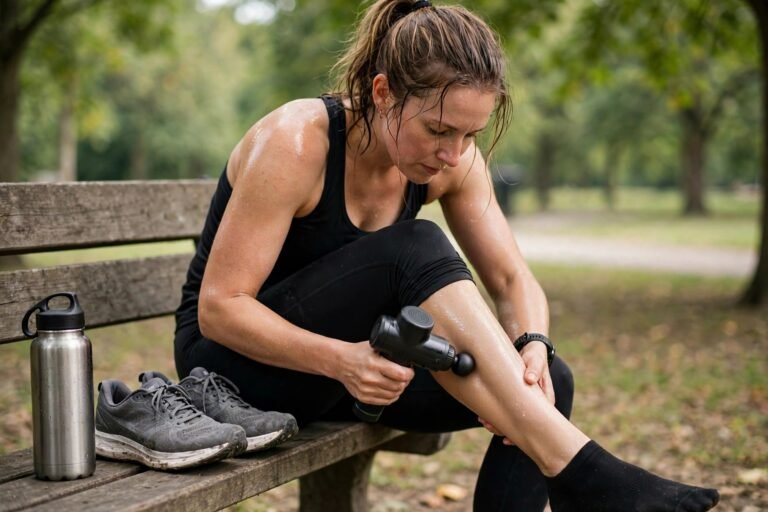
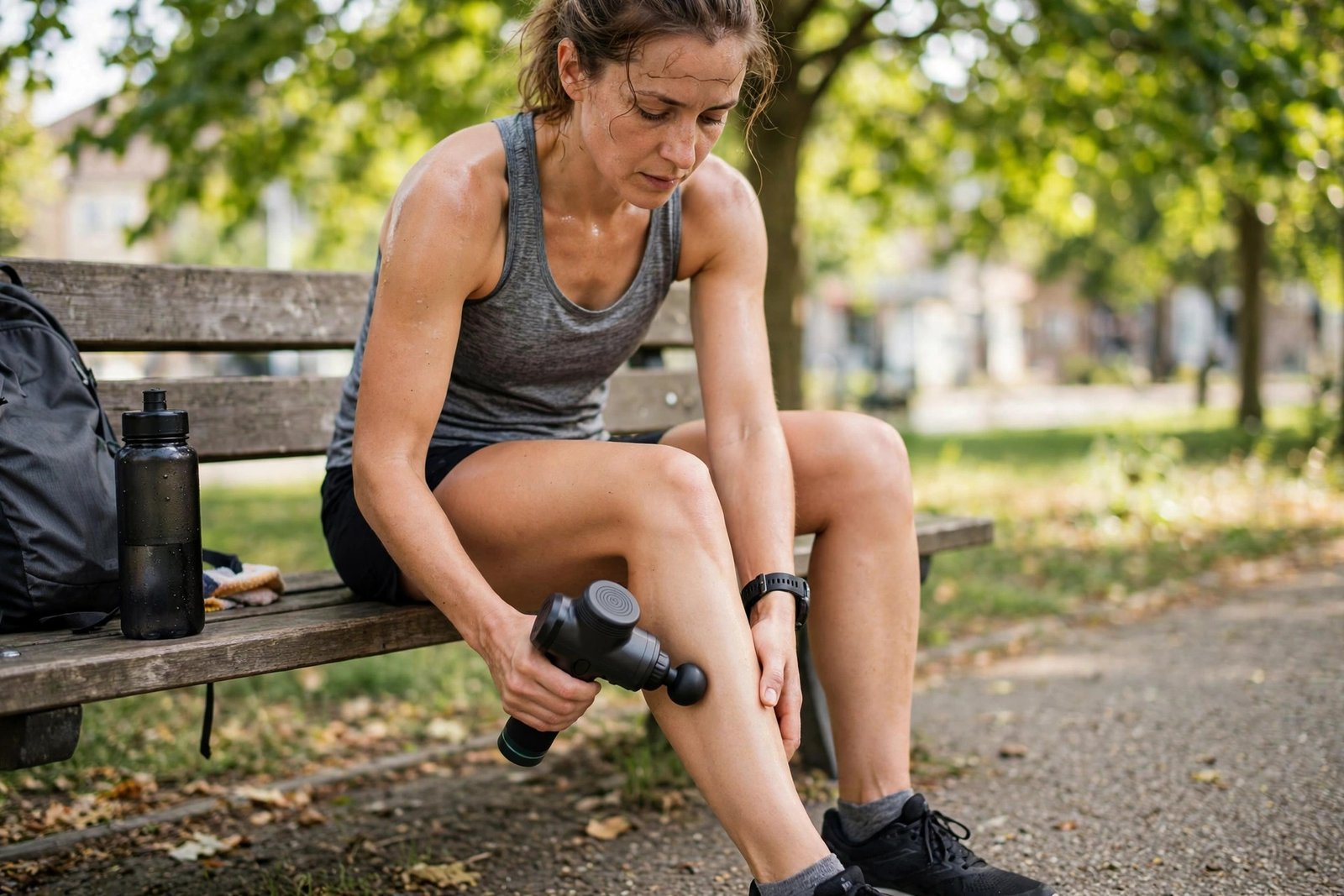
Safe zones: the calf, the muscles beside the shin bone, and the front of the lower leg at low speed with a soft head. Those are the tissues pulling on the bone, and loosening them is the whole point.
Never use a gun directly on a tender spot on the bone, on the shin bone itself with a hard head, or on a spot that hurts more when pressed. Point tenderness in one spot can mean a stress fracture — percussing that spot makes it worse. One runner put it plainly: a massage gun made their shin pain worse, and specifically warned against massaging the tender part of the shin.
Two more rules. Stop if the pain gets worse, and ask a doctor about a shin that stays painful. A leg with reduced feeling, such as in neuropathy, needs medical advice before any massage gun.
How often should I use it?
Start low and short: a few minutes on the calf and around the shin, once or twice a day, at the lowest speed, with a soft ball head. If it hurts more afterward, stop and reassess — more pressure is not better here. Many runners find a short session after a run, once the legs have cooled down, is when it helps most.
Do not use it as a replacement for the basics that actually address shin splints: rest when it flares, supportive shoes, and not increasing mileage too fast. The gun is a daily tool for the muscle around the problem, not a fix for the problem itself.
When should I see a provider instead?
If the pain eases once you are warmed up and responds to loosening the calf, a massage gun is a reasonable daily tool. If it does not, or you have point tenderness in one spot on the shin, numbness, or swelling, skip the device and see a clinician. The same applies if the pain is getting worse over weeks, if it started after an injury, or if you have diabetes or reduced feeling in your legs. Nothing on this page is medical advice.
Prices checked 12 November 2026. Amazon prices change frequently, so treat these as a guide and check the live price on the listing before ordering.
Frequently asked questions
Can I use a massage gun on shin splints?
Yes, on the surrounding muscle — the calf and the muscles beside the shin bone. Never directly on a tender spot on the bone. The gun loosens the tissue that pulls on the shin; it does not treat shin splints.
What is the best massage gun for shin splints?
The Theragun Elite, for its 16mm amplitude. The Bob and Brad D6 Pro matches it on power and has the better shin attachment — an air-cushioned head that spreads the pressure instead of concentrating it on the bone.
Is it safe to use a massage gun on the shin bone?
Not directly on the bone with a hard head. Use a soft or air-cushioned head on the muscles beside it, at low speed. Never on a tender spot — point tenderness can mean a stress fracture, and that needs a provider, not a gun.
How long does it take for shin splints to heal?
It varies — weeks for most runners, longer if the load is not reduced. Rest and load management matter most; a gun does not speed healing. If it is not improving after a few weeks, see a clinician.
More recovery picks are coming in our Sports & Outdoors category — the runners guide is next. Our first guide in this cluster, best massage gun for plantar fasciitis, covers the same guns for sore feet and calves.